What Is Endoscopy? Procedure, Benefits & When You Need It
Endoscopy is one of the most advanced and minimally invasive procedures used to diagnose and treat digestive system disorders. It allows doctors to examine internal organs with precision, detect early disease signs, and provide accurate treatment recommendations.
In this article, we’ll cover what endoscopy is, how the procedure works, its benefits, and when you should consider getting one.
What Is Endoscopy?
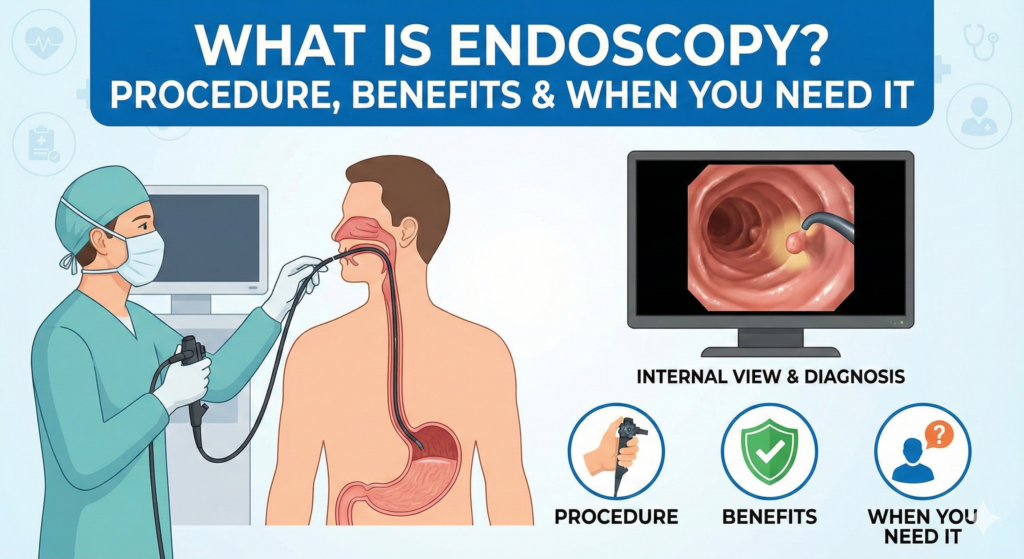
Endoscopy is a diagnostic procedure that uses a thin, flexible tube called an endoscope equipped with a camera and light. This device allows your doctor to view internal organs — especially those inside the digestive tract — without making any external cuts.Types of Endoscopy
Different types target different parts of the digestive system:-
Upper GI Endoscopy (EGD) – examines the esophagus, stomach, and upper intestine
-
Colonoscopy – examines the colon and rectum
-
Capsule Endoscopy – camera pill that captures images of the small intestine
-
Enteroscopy – advanced examination of the small bowel
How Does an Endoscopy Procedure Work?
Step-by-Step Procedure
Understanding the process helps reduce anxiety and prepares you better.1. Pre-Procedure Preparation
Your doctor may advise:-
Fasting for 6–8 hours
-
Stopping certain medications temporarily
-
Arranging someone to drive you home (due to sedation)
2. Sedation & Monitoring
A mild sedative is given to keep you comfortable and relaxed.3. Inserting the Endoscope
The endoscope is gently inserted through the mouth (for upper GI) or rectum (for colonoscopy).4. Real-Time Imaging
The doctor views detailed images of your digestive tract on a screen, identifying:-
Inflammation
-
Ulcers
-
Bleeding
-
Tumors
-
Blockages
5. Biopsy or Treatment (If Needed)
Small tissue samples may be taken, or minor treatments performed during the procedure.6. Recovery
You will rest briefly before going home. Most people resume normal activities the next day.Benefits of Endoscopy
Endoscopy offers several advantages over traditional diagnostic surgeries.Minimally Invasive and Safe
No external surgical incisions are needed.
Early & Accurate Diagnosis
Endoscopy helps detect:
-
-
Gastritis
-
Ulcers
-
Acid reflux damage
-
Celiac disease
-
Cancerous or precancerous growths
-
Quick Procedure and Recovery
Most endoscopies take 10–20 minutes, with minimal downtime.Therapeutic Uses
Endoscopy can treat issues such as:-
Removing polyps
-
Stopping internal bleeding
-
Stretching narrowed areas (strictures)
When Do You Need an Endoscopy?
You should consider an endoscopy if you experience persistent or severe digestive symptoms.Common Symptoms Requiring Endoscopy
-
Severe or recurring acidity/heartburn
-
Difficulty swallowing (Dysphagia)
-
Unexplained vomiting
-
Chronic stomach pain
-
Unexplained weight loss
-
Blood in vomit or stools
-
Persistent nausea
-
Long-standing indigestion
Signs of Serious Gastrointestinal Conditions
Endoscopy is often recommended to diagnose:
-
-
Ulcers
-
Gastroesophageal Reflux Disease (GERD)
-
Barrett’s esophagus
-
Stomach or esophageal cancer
-
Celiac diseaseInflammatory bowel diseases
- Inflammatory bowel diseases
-
Screening for Cancer
If you are above 45 or have a family history of GI cancers, routine screenings may be advised.Is Endoscopy Painful?
No — endoscopy is generally painless because sedation is provided.Most patients remember very little of the procedure and experience no discomfort.
Risks of Endoscopy (Rare but Possible)
While endoscopy is very safe, minor risks include:-
Sore throat
-
Bloating
-
Temporary dizziness
-
Rare bleeding (if biopsy is done)
Serious complications are extremely rare when performed by an experienced gastroenterologist.
Conclusion
Endoscopy is a simple, safe, and highly effective procedure for diagnosing a wide range of digestive conditions. Its ability to provide quick and accurate results makes it an essential tool in modern gastrointestinal care.
If you’re experiencing persistent stomach issues, heartburn, unexplained weight loss, or difficulty swallowing, getting an endoscopy may help detect the root cause early and prevent serious complications.
Early diagnosis saves lives — don’t ignore the signs.