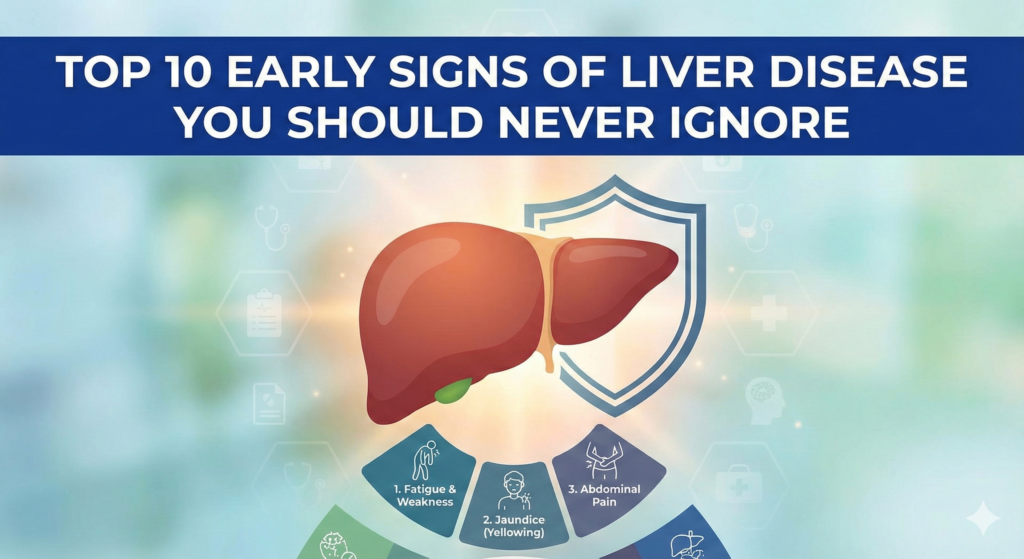
Top 10 Early Signs of Liver Disease You Should Never Ignore
The liver is one of the most vital organs in the human body, responsible for detoxification, digestion, metabolism, and nutrient storage. When the liver becomes damaged, it silently affects multiple body functions — often without causing noticeable symptoms in the early stages.
Recognizing these early signs can help prevent severe complications, including cirrhosis, liver failure, and liver cancer.
This comprehensive guide highlights the top 10 early signs of liver disease you should never ignore and explains when you must consult a liver specialist.
Persistent Fatigue & Weakness
Fatigue is often the first and most common sign of liver disease.
When the liver cannot filter toxins efficiently, your body becomes overloaded, causing:
- Low energy levels
- Brain fog
- Constant tiredness
Why This Happens
Because toxins accumulate in the bloodstream, they interfere with metabolic processes and sleep cycles.
2. Abdominal Pain or Swelling (Ascites)
Pain in the upper right side of the abdomen can indicate inflammation of the liver.
Associated Symptoms
- Bloating
- Pressure inside the abdomen
- Water retention
When to Seek Help
If swelling worsens or breathing becomes difficult, immediate medical evaluation is necessary.
3. Yellowing of Eyes or Skin (Jaundice)
Jaundice is a classic sign of liver dysfunction and occurs when the liver cannot process bilirubin.
Key Indicators
- Yellow eyes
- Yellowish skin tone
- Dark-colored urine
4. Unexplained Weight Loss & Loss of Appetite
A sudden loss of appetite or unexplained weight loss may indicate impaired liver function.
What Causes This?
Liver disease affects how the body digests food and absorbs nutrients.
5. Dark Urine & Pale Stool
Changes in urine or stool color usually signal a liver or bile duct problem.
Symptoms to Note
- Tea-colored or cola-like urine
- Chalky, pale, or clay-colored stools
This happens when bile flow is disrupted.
6. Nausea or Vomiting
Digestive issues are common when the liver cannot properly filter toxins.
Related Symptoms
- Frequent vomiting
- Loss of appetite
- Metallic taste in the mouth
Itchy Skin Without Rash
Constant itching without a rash is often a sign of cholestasis, where bile salts build up under the skin.
When It’s Serious
If itching is persistent, especially at night, it may indicate chronic liver disease.
8. Swollen Legs and Ankles
Fluid retention in the lower limbs indicates reduced liver function and low protein levels.
Common Signs
- Puffy ankles
- Edema in legs
- Tightness around footwear
Easy Bruising or Bleeding
The liver produces proteins needed for blood clotting. When it’s damaged:
- Small injuries bruise easily
- Nosebleeds become common
- Bleeding lasts longer than normal
10. Confusion or Memory Problems (Hepatic Encephalopathy)
When toxins reach the brain due to poor liver filtration, neurological symptoms appear.
Symptoms Include:
- Confusion
- Poor concentration
- Memory loss
- Mood changes
When Should You See a Liver Specialist?
You should consult a gastroenterologist or hepatologist if you experience:
- Persistent fatigue
- Yellowing of eyes
- Abdominal swelling
- Dark urine or pale stools
- Chronic digestive issues
Early diagnosis prevents long-term liver damage and improves recovery outcomes.
Conclusion
Liver disease often develops silently, but your body gives early warning signs — if you know how to identify them. Recognizing symptoms like fatigue, jaundice, abdominal pain, swelling, and mental confusion can help you seek timely medical care.
The earlier liver disease is diagnosed, the easier it is to treat and reverse.
If you notice any of these symptoms, consult a liver specialist immediately for proper evaluation and treatment.
Frequently Asked Questions (FAQs)
1. What is the earliest sign of liver disease?
Fatigue and weakness are often the first signs, followed by changes in urine or stool color.
2. Can liver disease be reversed?
Yes. Early-stage fatty liver and mild inflammation can often be reversed with treatment, lifestyle changes, and medical care.
3. Does liver disease cause stomach pain?
Yes. Pain on the upper right side of the abdomen is a common symptom.
4. What tests detect liver disease?
Liver function tests (LFT), ultrasound, FibroScan, CT scan, and MRI help diagnose liver diseases.
5. Should I see a doctor if I have jaundice?
Absolutely. Jaundice is a serious sign of liver dysfunction and requires immediate medical evaluation.